
A leap is any moment when the next note isn’t already under your hand. You have to let go, travel, and land on the exact key. For a split second you aren’t touching anything, so you can’t creep over to the next note. That’s why leaps feel scary.
Distance doesn’t matter. One key or two octaves, it’s the same targeting skill. And contrary to what you may have been told, slow practice is not how you master it.
1. Treat leaps as a targeting skill, not a finger skill
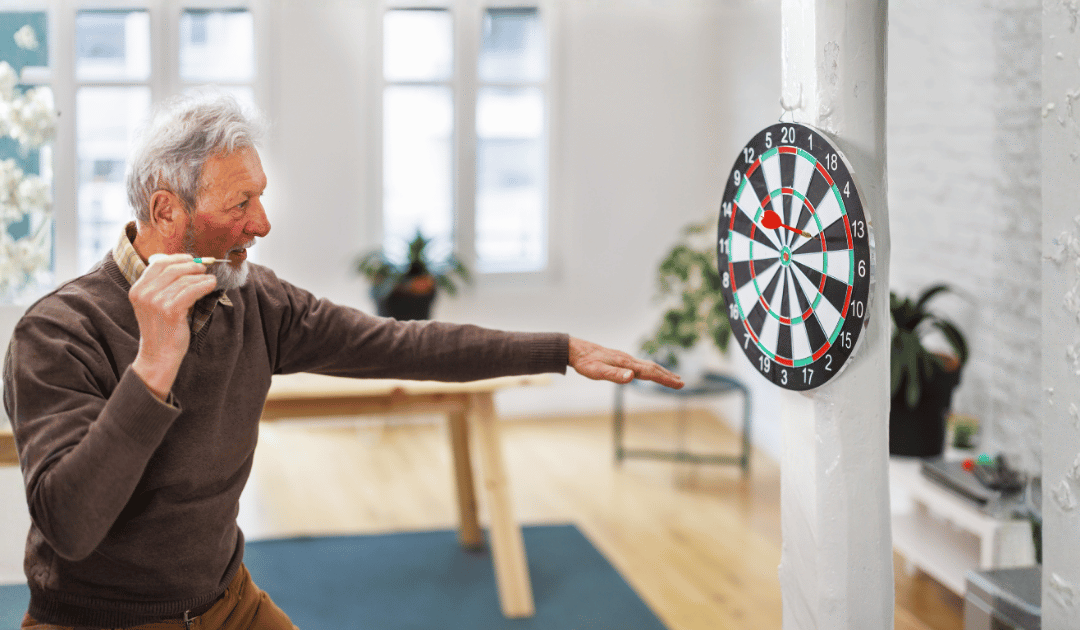
Think of throwing darts. You don’t think harder today and hit bullseyes tomorrow. Your body learns exact distances and timing through repetition, and that takes time. Nothing is wrong with you if it hasn’t clicked yet.
But time is not the same as slow motion. Practice a whole leap slowly and you will not learn the leap as an automatic physical response. This means you are more prone to inaccuracy, memory slips or forgetting to move your hand in time. That’s the opposite of how reliable leaps work. At tempo, the parking turns into a scramble.
2. Use a rebound
Those little pauses after a leap usually mean you’re getting there too late. Practice every leap as a pair: the launch note and the target note.
As soon as you play the launch note, release it and let the key’s rebound start you traveling. You may feel a tiny push off from the bottom of the key. The sound is already made, so the push only sends you on your way. Keep your hand, forearm, elbow and shoulder light. If you tighten, there’s no rebound.
You should arrive on the destination note BEFORE it is time to play. This takes some getting used to. Doing so will ensure accuracy.
Arriving early also gives you time to choose how fast you put the key down, and that shapes the sound. Arrive late and all you can do is grab.
3. Know where you’re going
Do you land near the right place but not on it? I had that exact problem fresh out of graduate school. My teacher told me the cure was to “be there.” It took me years to understand her.
Arrive first, confirm you’re on the right key, then play. A few ways to know the destination:
- Find the nearest pair of notes between the chord you’re on and the chord you’re going to. That relationship is your map. Sometimes the two chords overlap. Then the “leap” turns into a change of fingers.
- Feel the distance in your body. Notice how far your upper arm turns in your shoulder socket, like the hands of a clock: 12 to 2, or 11 to 1.
- Close your eyes. Let the fingers that aren’t playing lightly touch the black keys. I call it the kitty whisker method. The groups of two and three black keys tell you where you are without looking. More on this in Why Practicing Piano With Your Eyes Closed Works.
4. Land one hand at a time
When both hands leap at once, it can feel like you’ve lost the keyboard. Your brain can’t aim two jumps at once while you’re learning them.
I don’t mean 10 minutes of one hand, then 10 minutes of the other. That won’t work. I mean: land one hand, hold it on the target keys, then land the other, then play. Once you’ve learned it, the switch is so quick it feels like both hands move together.
5. Use quick glances, not stares
Stare at your hands and you lose your place in the score. I once watched a student take 10 minutes to play the theme from the Goldberg Variations, lost between the keys and the page.
When you play from the score, keep your head still and flick only your eyes to the target keys, then straight back to the music. You aren’t searching. You’re checking. When both hands leap, glance at the harder leap and let the other hand land by feel.
Dorothy, a member of my community, tried this after watching my leaps video. “I was humbled to recognize how I habitually looked down at the keys way too often.”
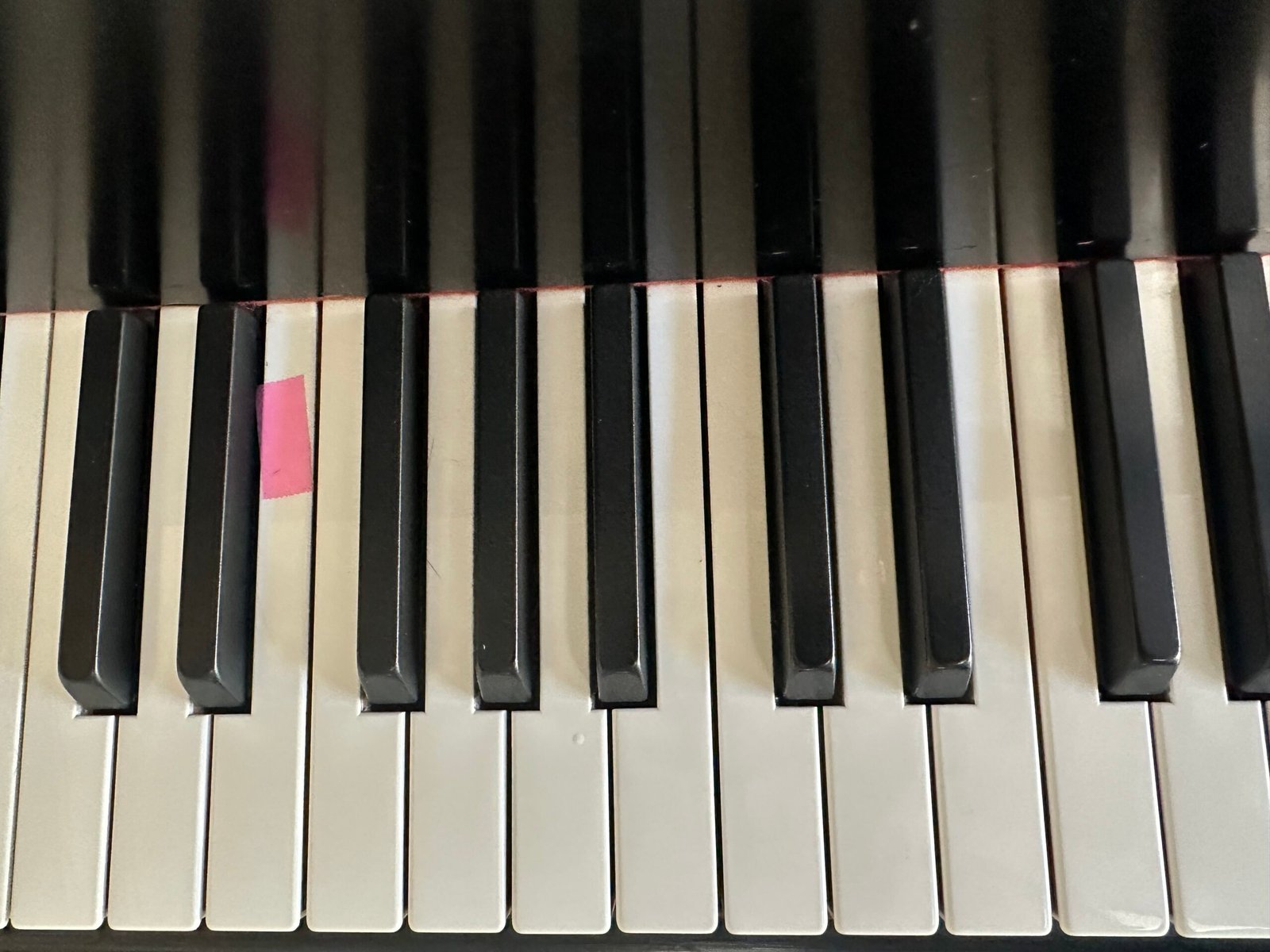
Sometimes you will need to practice moving your eyes from the page, to the target note, and then back to the page. I’ve used bright postit note flags on the keys to help students locate where they are going quickly. You could put a matching color postit in the music.
Watch it on the piano
You can see and hear all five on the Rachmaninoff Prelude in G Minor in my video, The Real Reason You Keep Missing Piano Jumps.
Want help applying this to your own pieces? The 28-Day Piano Journey inside Piano with Rebecca B walks you through it step by step. You also get video feedback on your playing. Start your 7-day free trial.