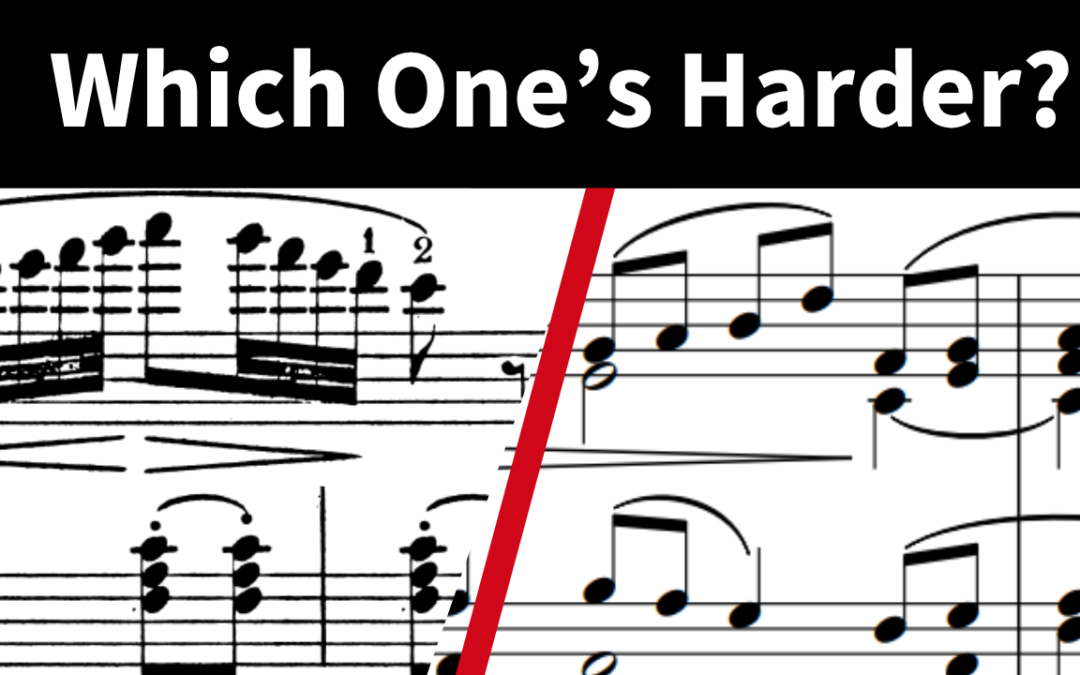
Most of us judge a piece by its grade number, or by how black the page looks. Both can fool you. A page full of sixteenth notes can be easier than it looks, and a quiet, simple-looking page can take months.
Difficulty on the page comes down to 7 specific things, and each one looks different when it gets harder. For every one, I ask the same question: is this a pattern I already know, or is this something new? That question will save you months of choosing the wrong piece.
Even at the conservatory, a page fooled me. I’ll tell you how when we get there. And sometimes the page that looks hardest is only badly printed.
1. Fast notes
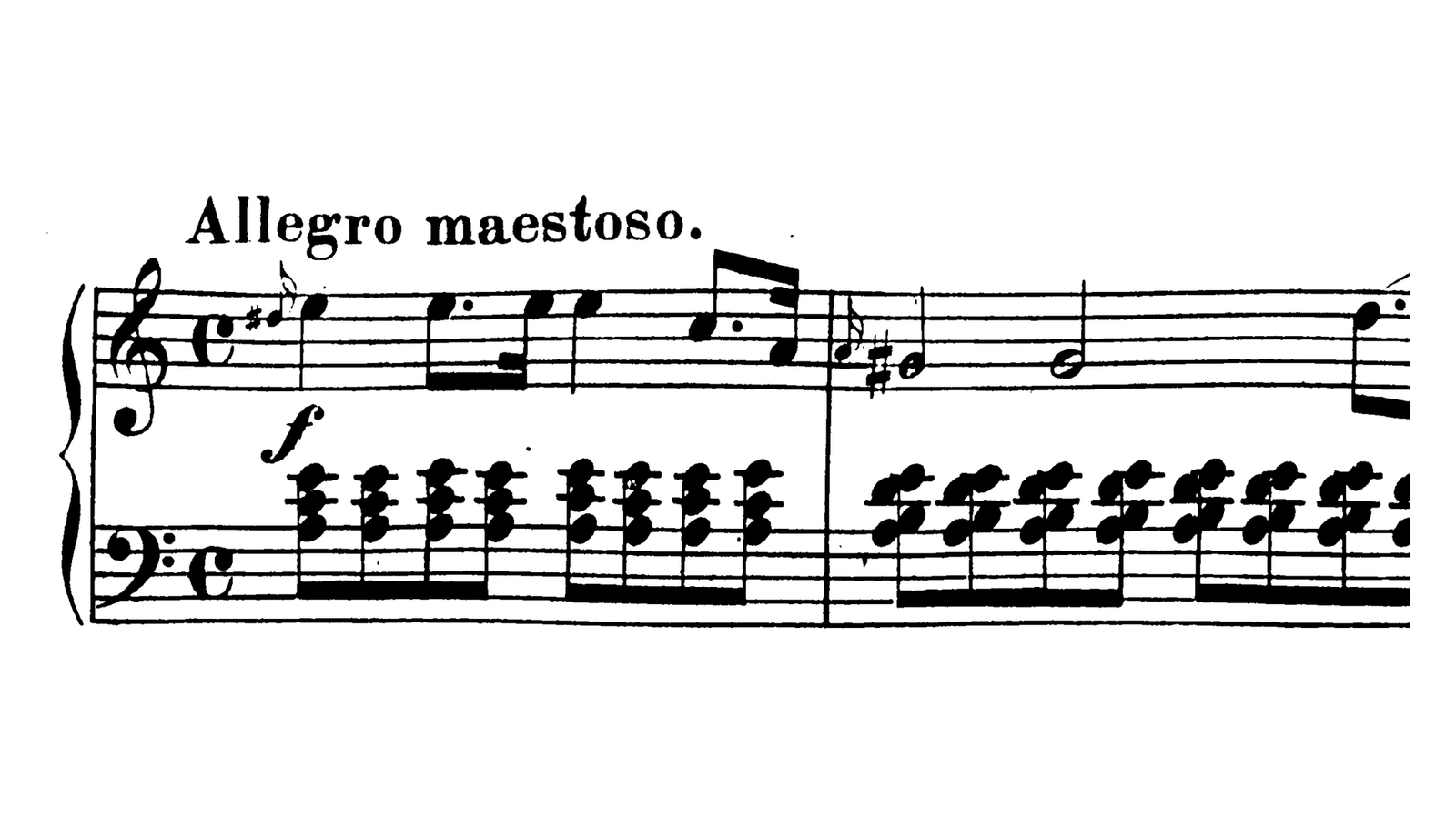
Easier: lots of fast notes isn’t the problem on its own. The opening of Mozart’s Sonata in C, K. 545, is full of long runs, but they’re regular and familiar, the kind of thing you’ve played when you practiced scales. Your hand already knows most of the patterns.
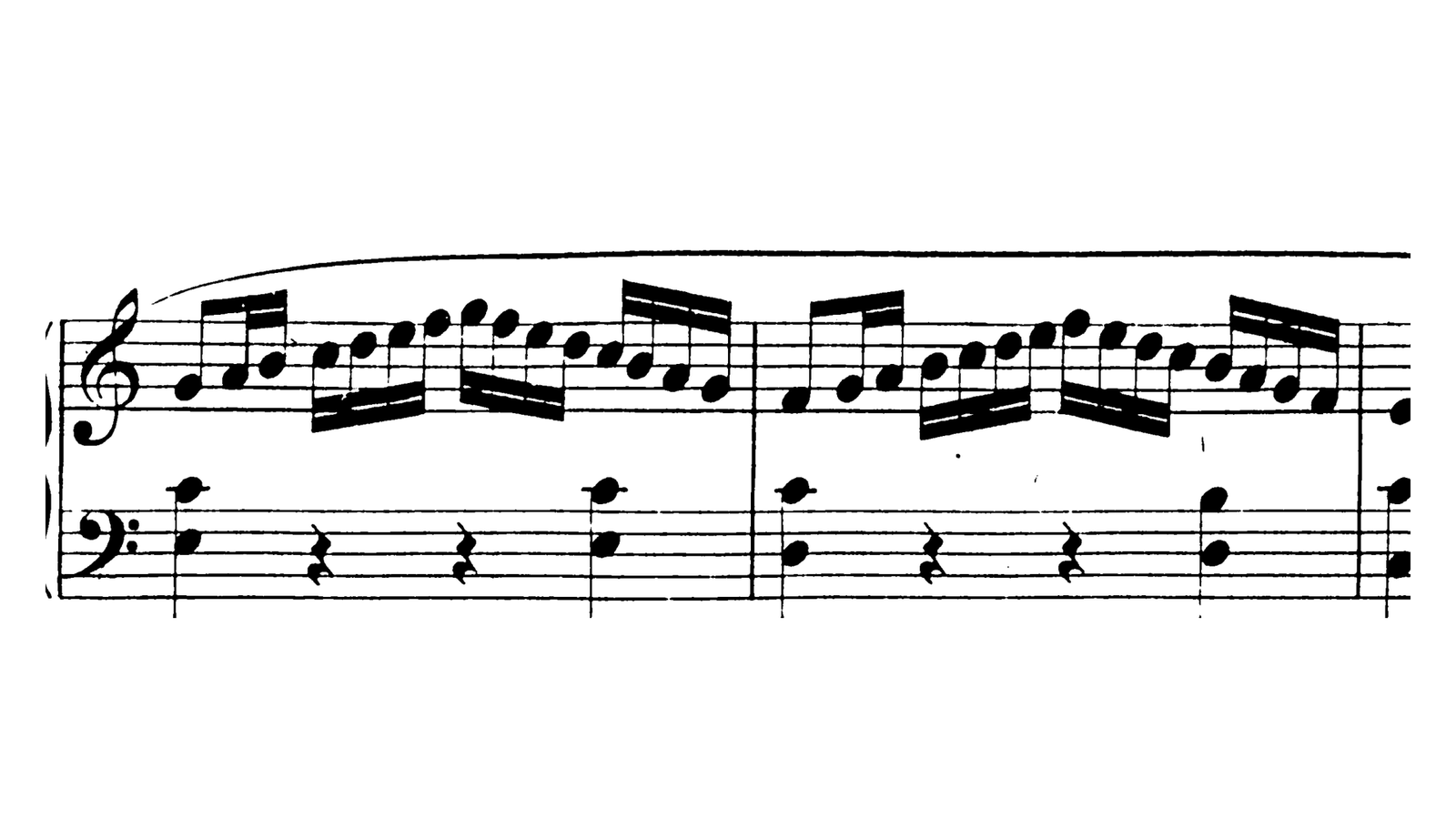
Moderate: Schubert’s Impromptu Op. 90 No. 2 looks similar on paper. But the pattern shifts often, and the flats put your thumb near the black keys, or on them. The fast notes go on for quite a few pages without a break and tension can build up. I look for that every time: is there a comfortable white key for the thumb? When there isn’t, a scale passage gets much harder.
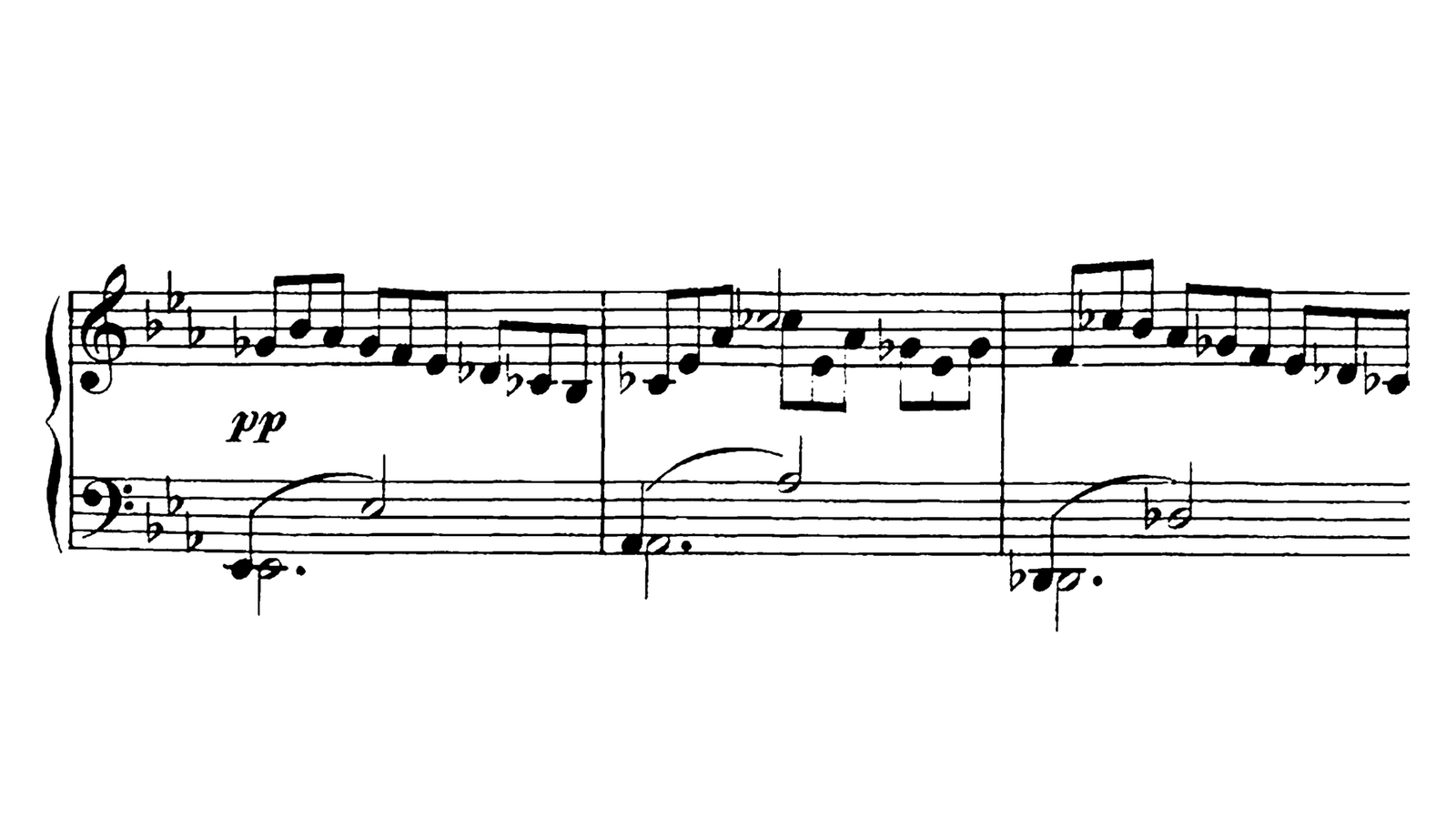
Harder: in Chopin’s Etude Op. 10 No. 1 the notes are very far apart, so going fast isn’t just about finger speed. It’s about moving a stretched hand across the keyboard without losing control.
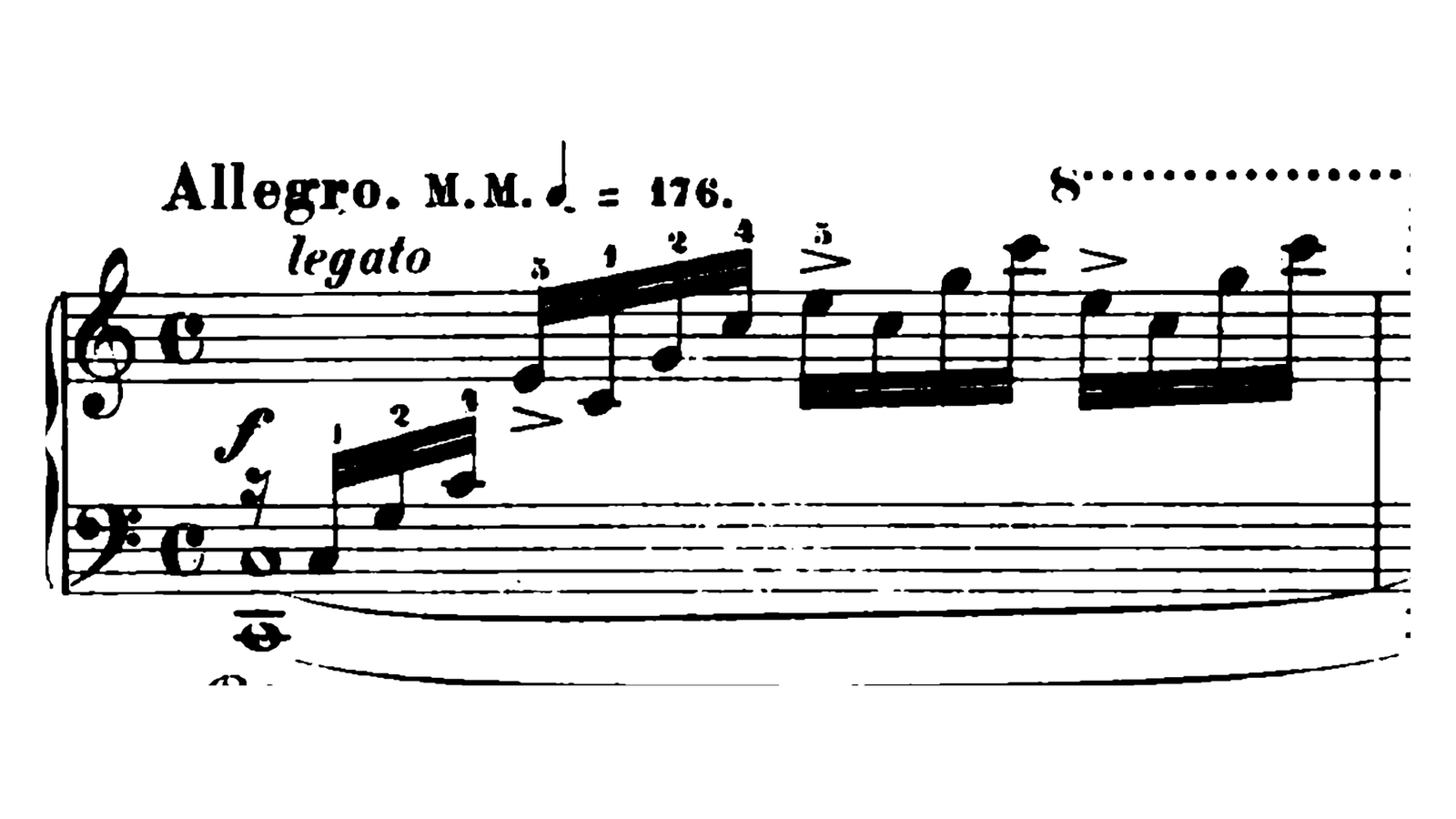
Fast notes get harder with: changes of direction, harder intervals, running out of fingers, changing patterns, and speed.
2. Leaps
Any time your hand has to move to a new place, even for 1 note, that’s a leap. Easier: a waltz bass, like the left hand in Chopin’s Waltz in B minor Op. 69 No. 2, has big gaps, but it’s the same pattern over and over. Your hand learns the distance once, then it just knows.
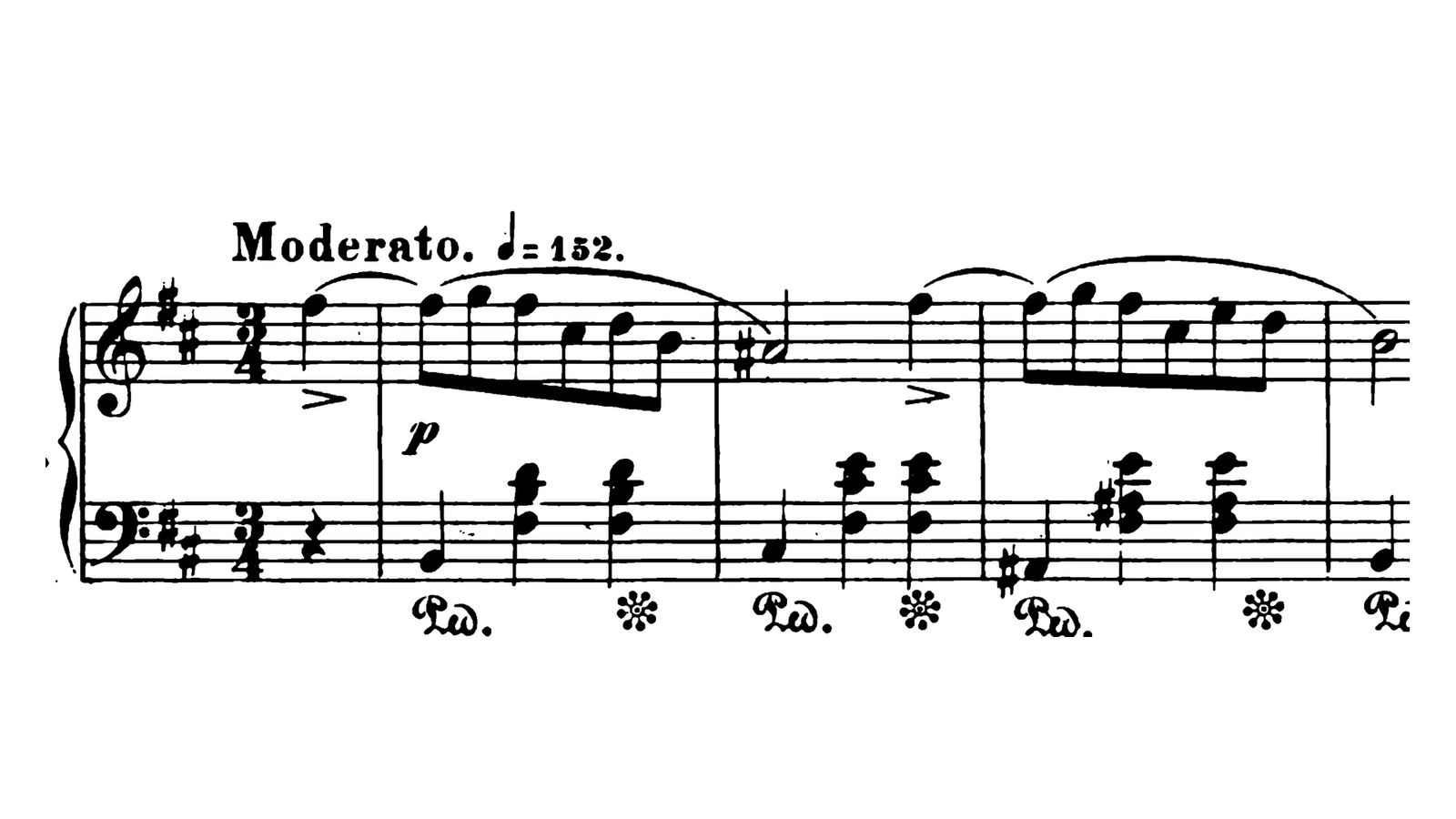
Moderate: in Schumann’s “Important Event,” Op. 15 No. 6, both hands leap at the same time, which is harder. But the leaps themselves are fairly close, and they follow a pattern you can see on the page before you play a note.
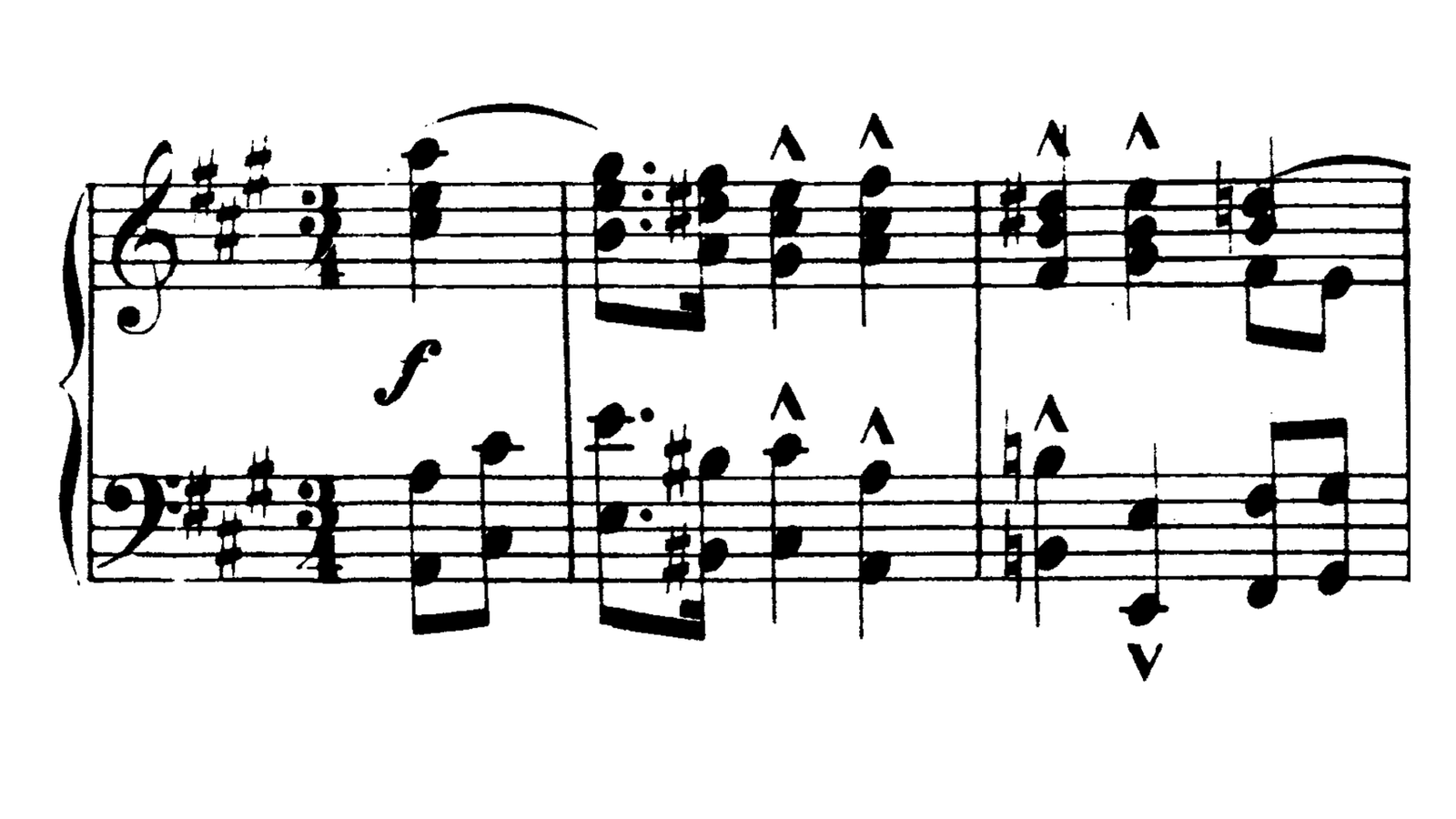
Harder: Rachmaninoff’s Etude-Tableau Op. 39 No. 6 is the other end: enormous gaps, leaps that never stop, at a fast tempo.
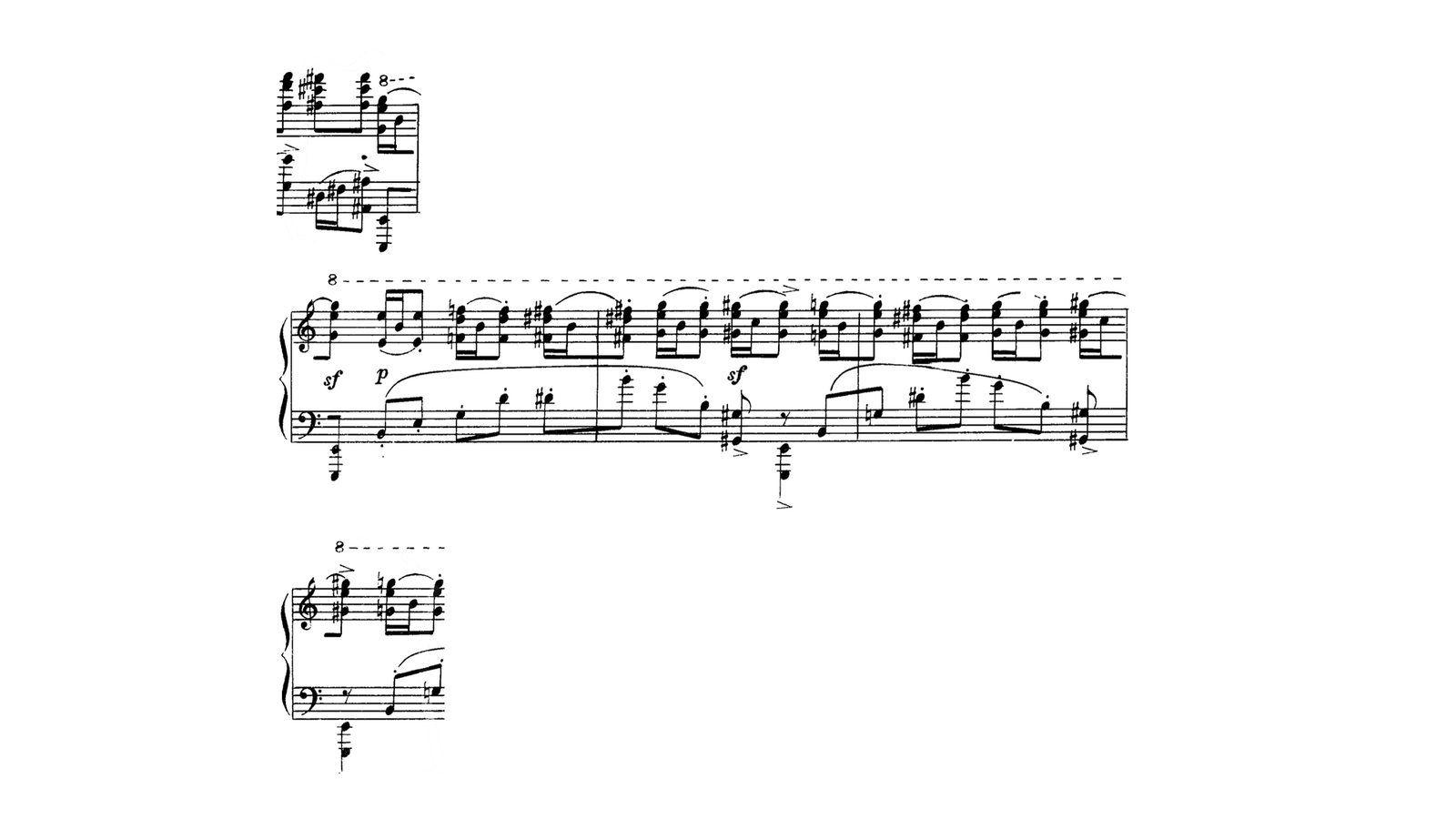
Leaps get harder with: size, speed, how often they come, and both hands leaping at once.
3. Notes at once
Chords work like words. A skilled reader recognizes a whole word at once instead of reading every letter. The chords you’ve seen a hundred times, you just know. The unfamiliar ones you have to spell out note by note, and that slows everything down.
Watch for two things on the page: a big gap inside a chord, where your hand has to stretch, and two noteheads squashed right next to each other. If the two noteheads are very close you might have to put some fingers very close together which can limit the span of the rest of your hand.
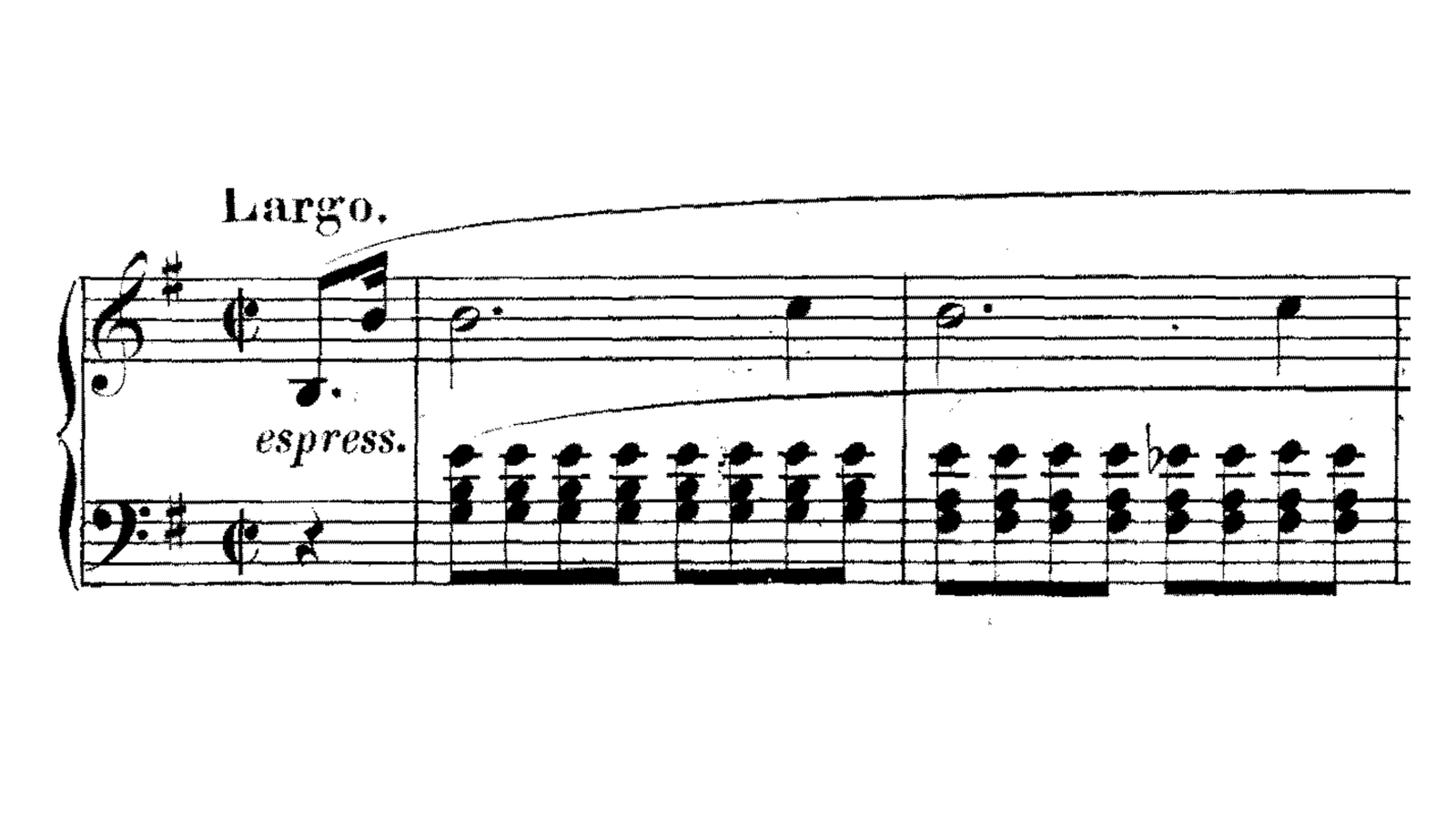
Moderate: in Chopin’s Prelude in E minor, the left hand plays 3-note chords on every eighth note, and only 1 note changes at a time. But the notes are packed tight, often right next to each other, so your fingers have very little room to settle.
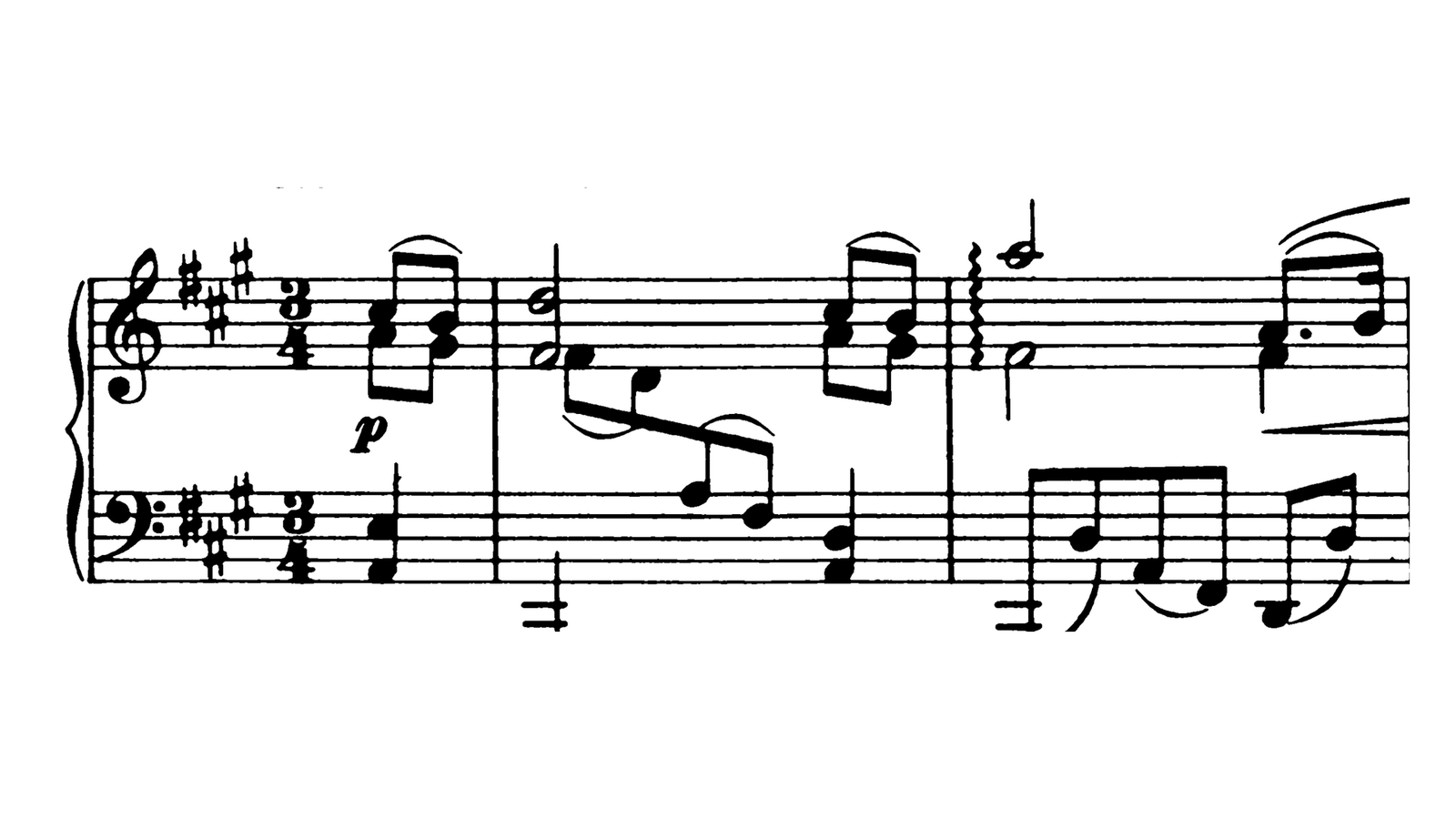
Harder: Brahms’s Intermezzo Op. 118 No. 2 gives you stacks of 4 and 5 notes in both hands, plus broken chords that stretch past an octave.
Chords get harder with: more notes, wider stretches, notes side by side, and unfamiliar shapes or sounds.
4. Two things at once
The page can look simple while one hand is quietly doing two jobs. Look at the stems. In Bach’s Menuet in G, they all point the same way in each staff: one job per hand. In Schumann’s Kinderszenen Op. 15 No. 1, some stems point up and some point down in the same staff. That’s your clue: melody, an accompaniment passed between the hands, and a bass, all at once.
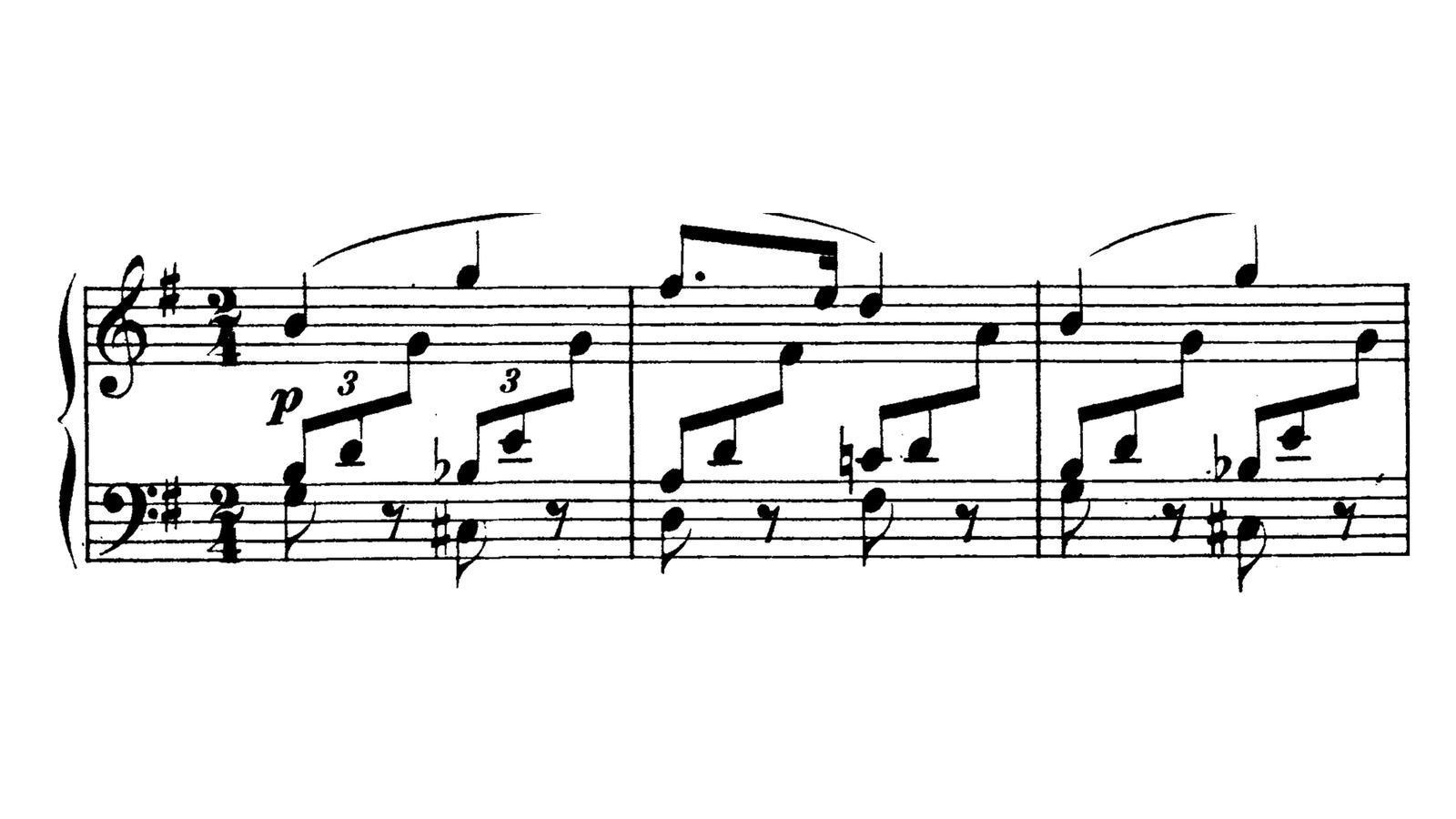
Look for: stems pointing both ways, held notes, and rests in the middle of a staff.
5. Rhythm
Rhythm is the hardest to spot, because often the problem isn’t in one hand. It’s in how the hands line up. In the Schumann, the melody has a dotted rhythm while triplets run underneath, so your hands are keeping two different subdivisions of the pulse at the same moment.
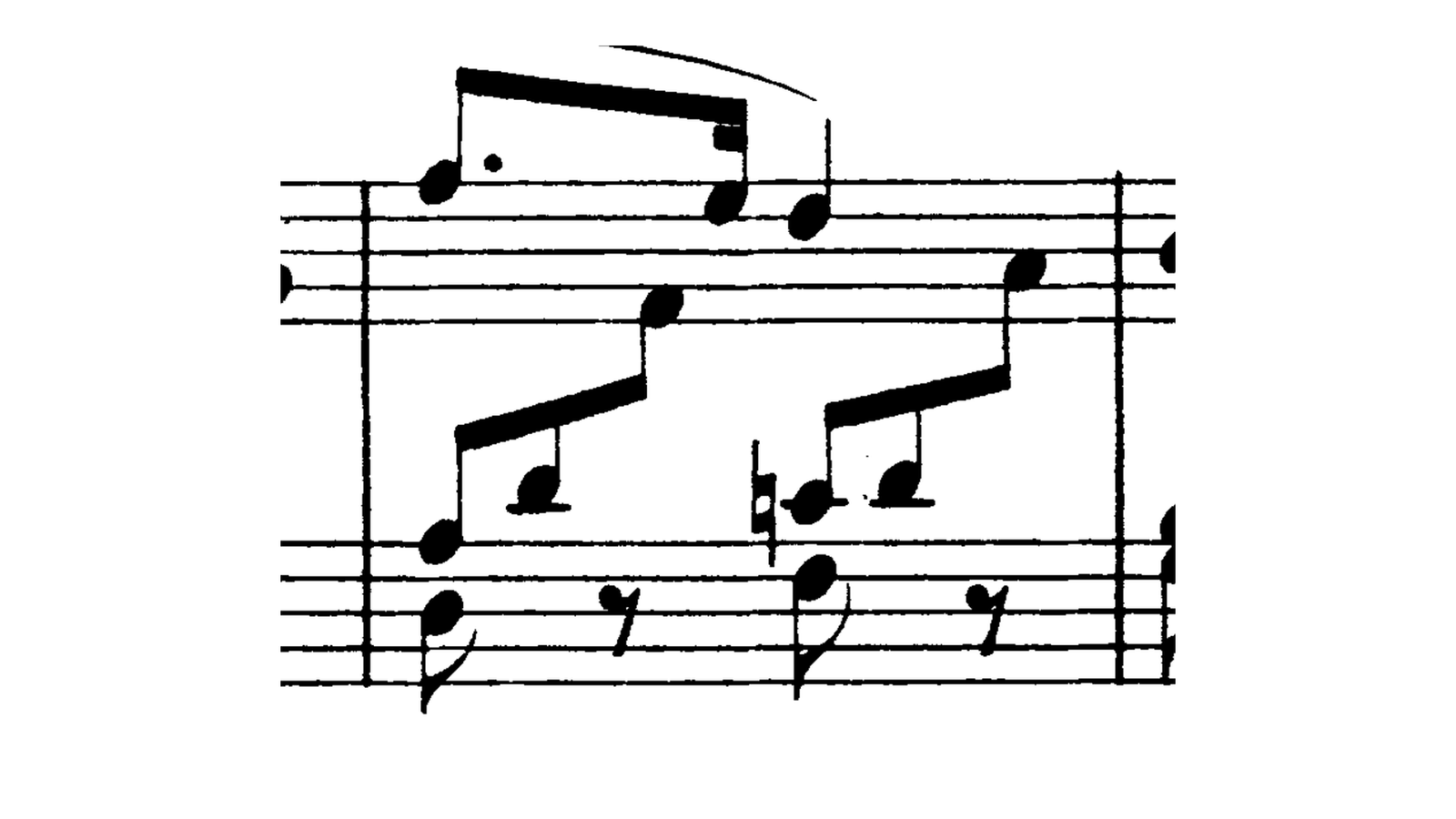
Look for: small numbers over groups of notes, beams that don’t line up between the hands, and changing time signatures. If each hand has a different number, the piece is harder than it looks.
6. Pedal and tone
This is the one that fooled me, even after years of training. At the conservatory I played Mozart’s Sonata in A minor, K. 310, and honestly thought Mozart was trying to torture me. Why couldn’t I get the melody to come out, when Chopin felt so much easier?
The answer was the instrument. Mozart wrote for the fortepiano, where low, middle and high were much more equal in volume. On a modern piano, that balance has to be built by hand. Years later a colleague let me try her fortepiano, and it was a completely different experience.
Warning sign: a busy left hand below middle C, a thin melody on top, and a forte marking, even with no pedal marks at all.
7. The key
Keys with lots of sharps and flats take more brainpower. At first you have to remember which notes are sharp or flat. Over time that becomes automatic, in your ear and in your hands. Your hands have to learn the feel of each key, and the more sharps or flats it has, the less often it shows up. So you don’t get much practice.
- Easy: 0 to 2 sharps or flats
- Moderate: 3 to 5
- Hard: 6 or 7
Here’s the paradox: the “hard” keys are often the easiest to play. Your hand sits in a comfortable position, thumb on the white keys, long fingers on the black ones. Chopin’s favorite scales were B, F sharp and D flat.
How to get comfortable in hard keys: sight-read in them, on Sight Reading Factory or from printed music. Play scales and chords in those keys. Or work through a book with a piece in every key, such as:
- William Gillock, Lyric Preludes in Romantic Style (intermediate)
- Robert D. Vandall, Preludes (early intermediate to early advanced)
- Dennis Alexander, 24 Character Preludes (late intermediate to early advanced)
One teaching approach avoids the problem altogether: learn all 12 keys early on. These method books do that:
- Keith Snell, Beginning Piano Multi-Key Reading
- Robert Pace, Music for Piano
Is it the music, or just the printing?
Here’s a trick I like. Schumann’s “Warum?” printed in a crowded edition looks far harder than the same notes spread out on the page. Same piece, same difficulty.
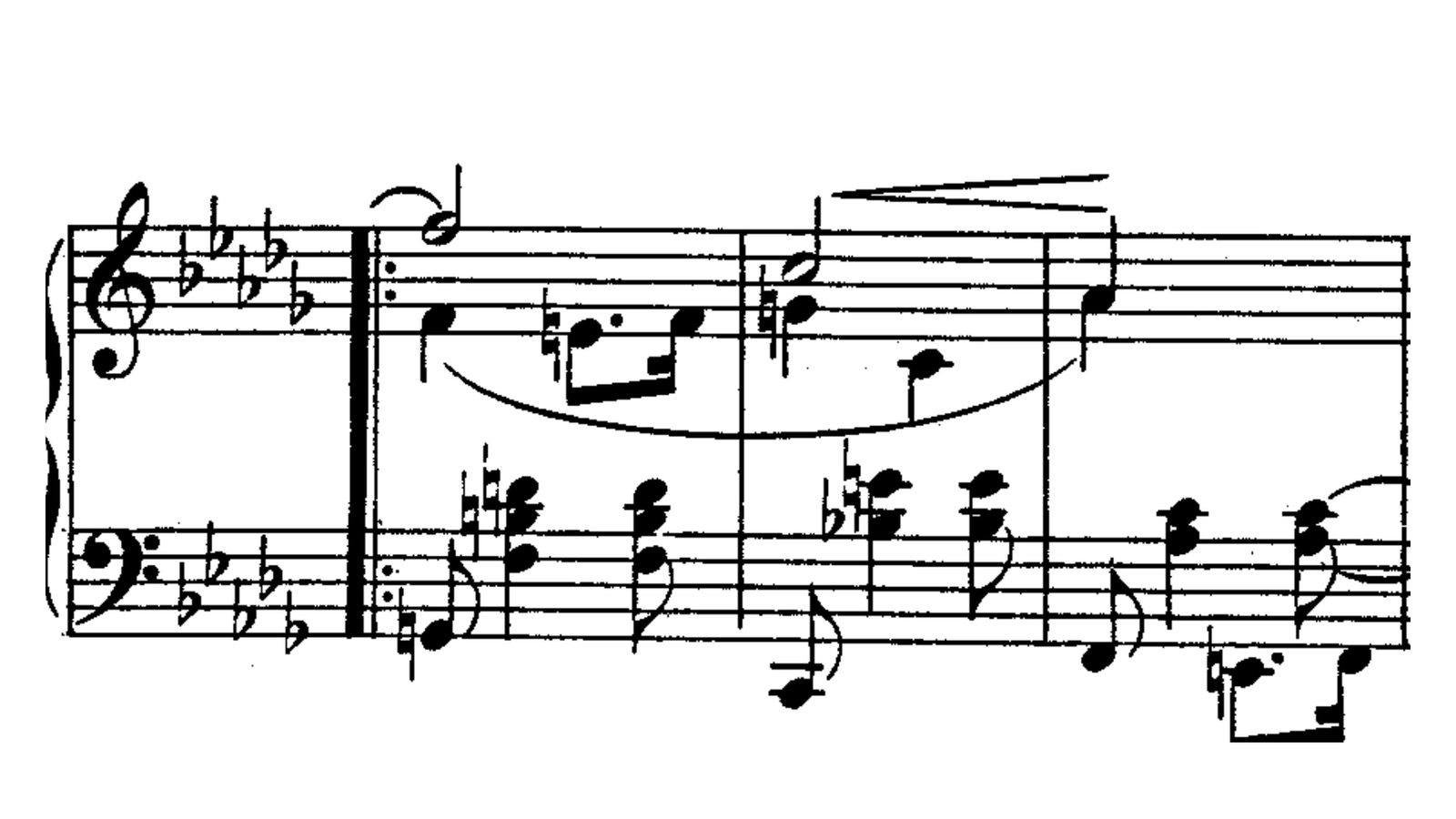
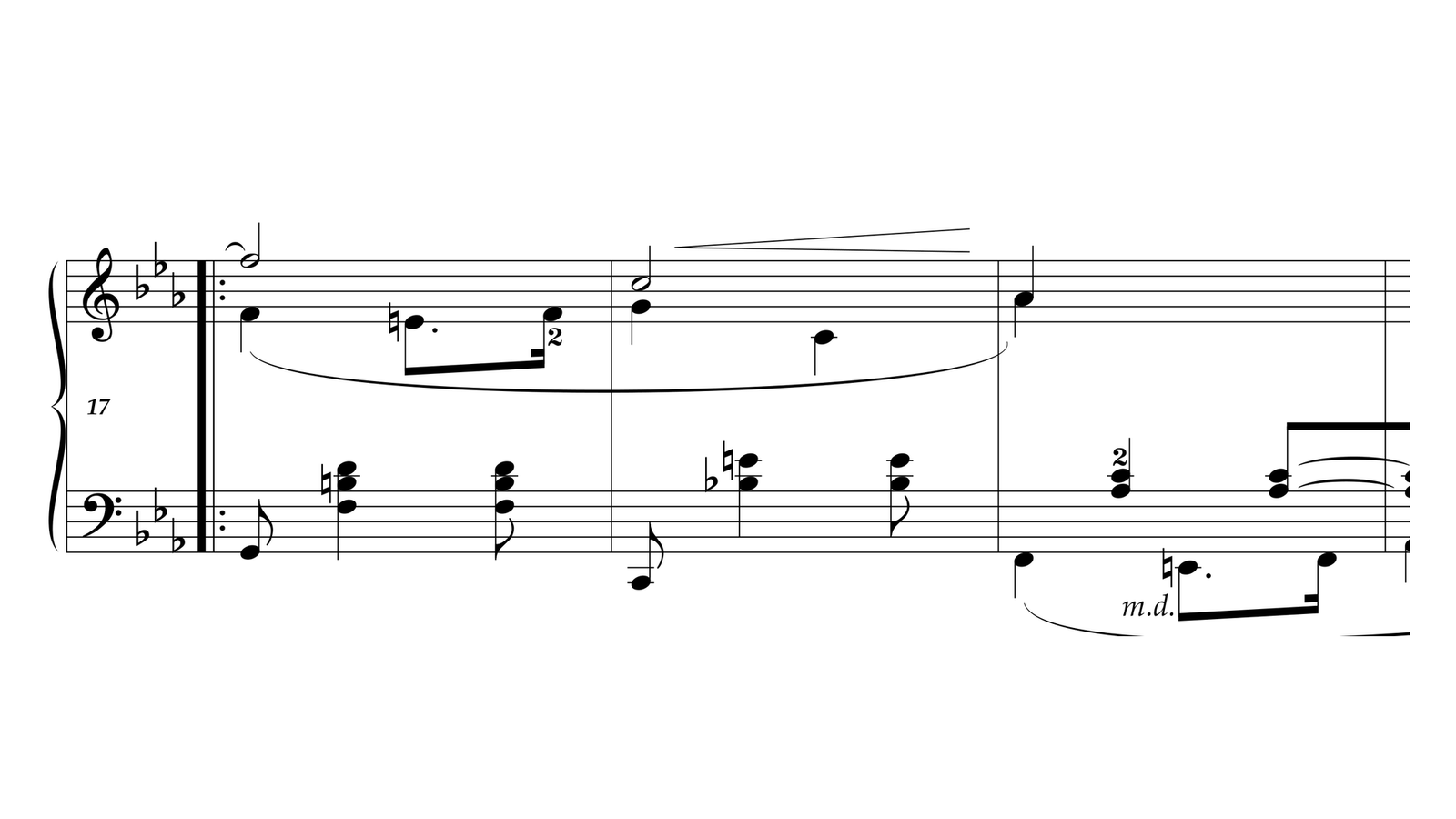
If a page looks impossibly cramped, find another edition, enlarge a paper copy, or zoom in on your iPad before you decide anything.
The 5-minute page scan
- Look at every page, not just the first. In Debussy’s Arabesque No. 1 the hardest part comes near the end, when the theme returns with a second line running underneath it.
- For each of the seven, find the hardest spot: the fastest run, the biggest leap, the thickest chord, the place one hand does two jobs, the strangest rhythm, the pedaling challenge, the key.
- Ask the question about each spot: a pattern I already know, or something new? Familiar patterns come together faster than you’d expect. When several new things pile into the same spot, that’s where a manageable-looking piece turns into months of work.
- Watch a performance on YouTube with the score open. You’re not listening for beauty. You’re watching what the hands actually have to do.
A pattern you already know, or something new? Now you can see the answer before you buy the music.
Want to know which of the seven are your strong spots, and which are quietly making your choices harder? Find out with the free skill map. It takes about 5 minutes.